Understanding agents
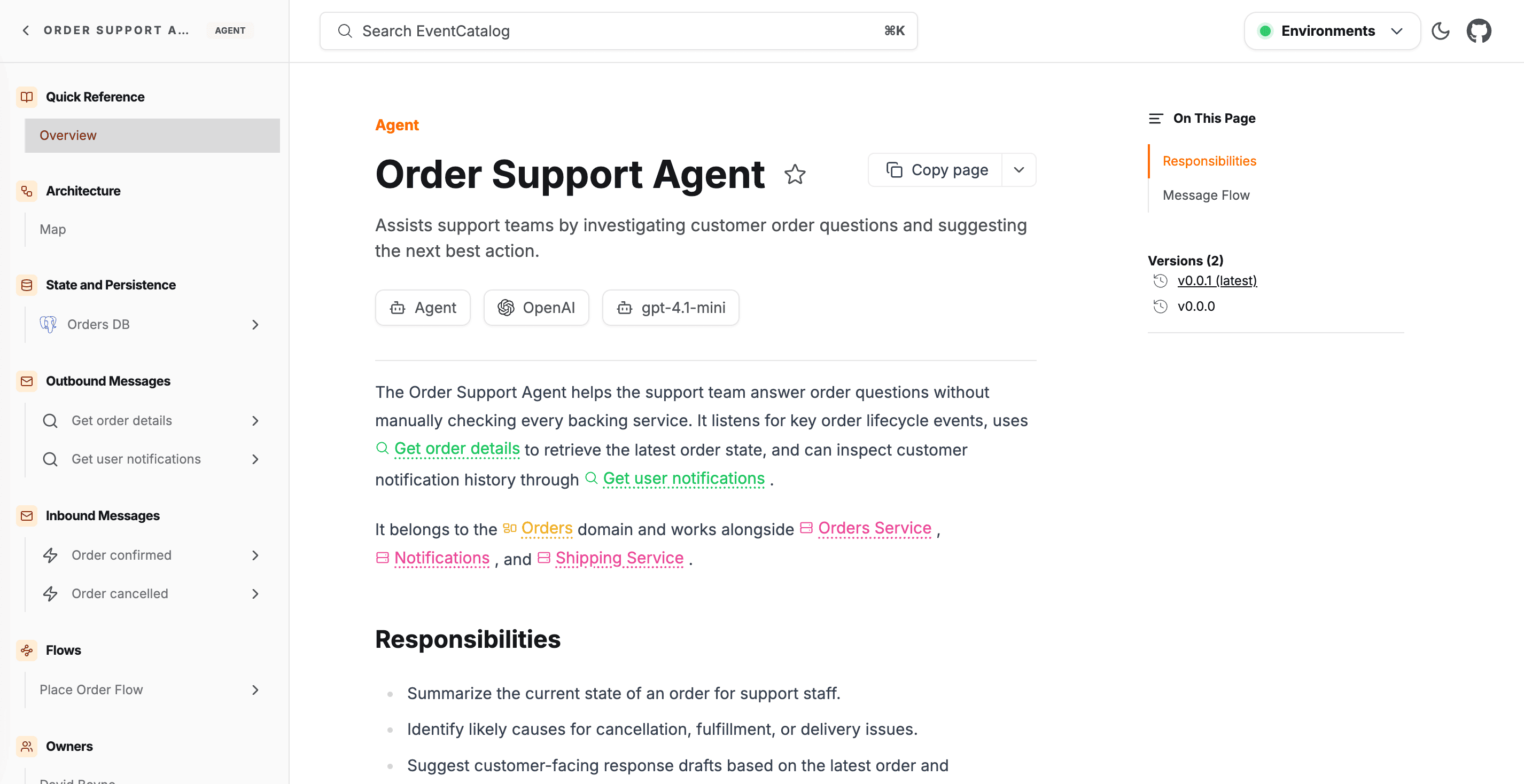
eventcatalog@3.41.0In EventCatalog, agents represent AI-powered components in your architecture. They sit alongside services, messages, domains, and flows as first-class catalog resources.
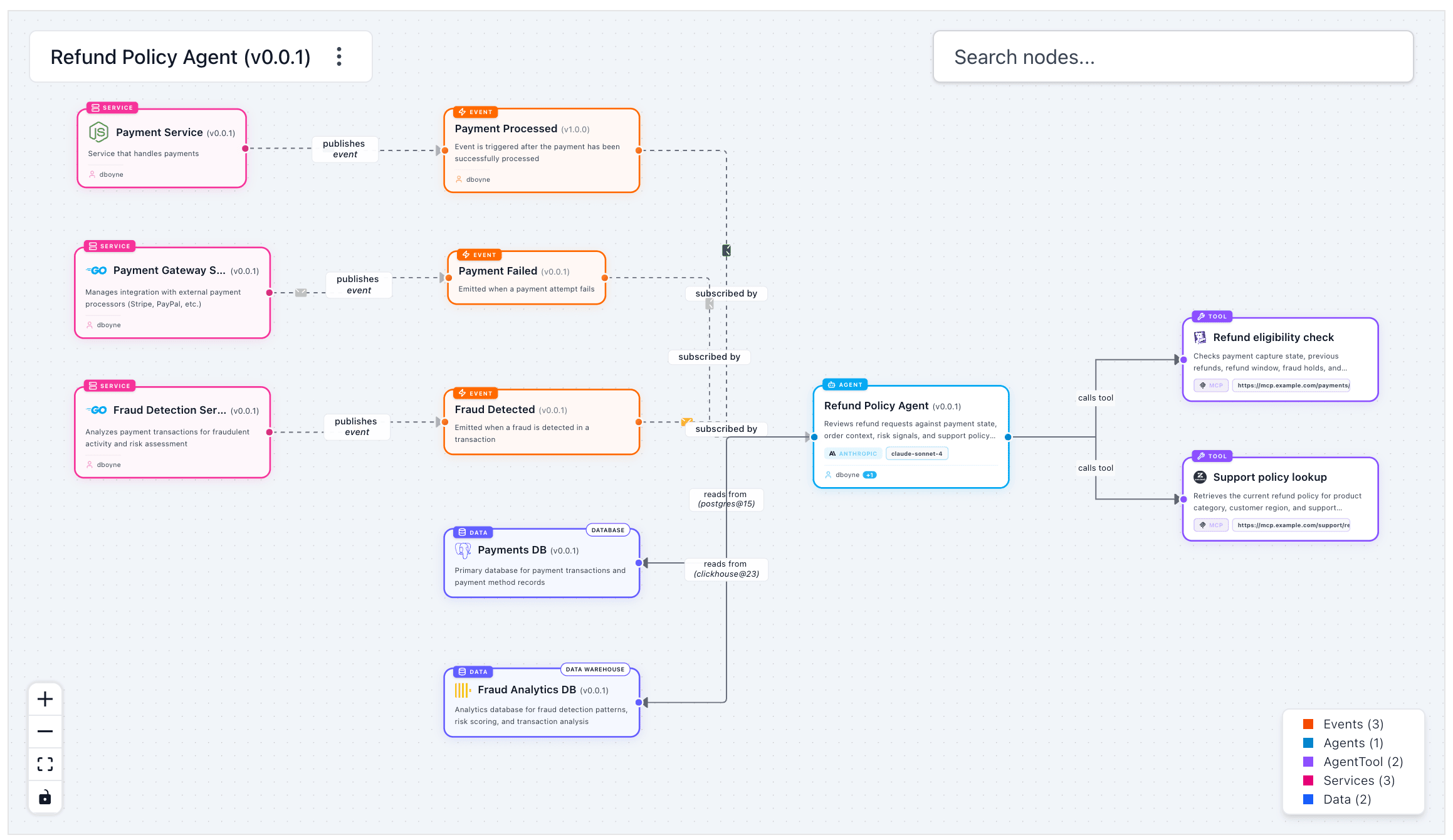
An agent typically wraps a large language model (LLM) and is given access to tools (MCP servers, APIs, databases) so it can take autonomous or semi-autonomous actions.
Why document agents?
As AI agents take on real responsibilities in production systems they become part of your architecture whether or not they are documented.
Cataloging them gives your team:
- Discoverability — engineers and stakeholders can find what agents exist, what they do, and who owns them.
- Model governance — the
modelblock captures which provider, model, and snapshot version the agent runs on so drift is visible in the catalog. - Tool transparency — the
toolsarray lists every external capability (MCP server, API, database) the agent can reach.
Where agents live in your architecture
Agents can belong to a domain or subdomain, or sit at the root of your catalog alongside services. They participate in flows as first-class steps and appear in search, the sidebar, and the discover page.
Finding agents in your catalog
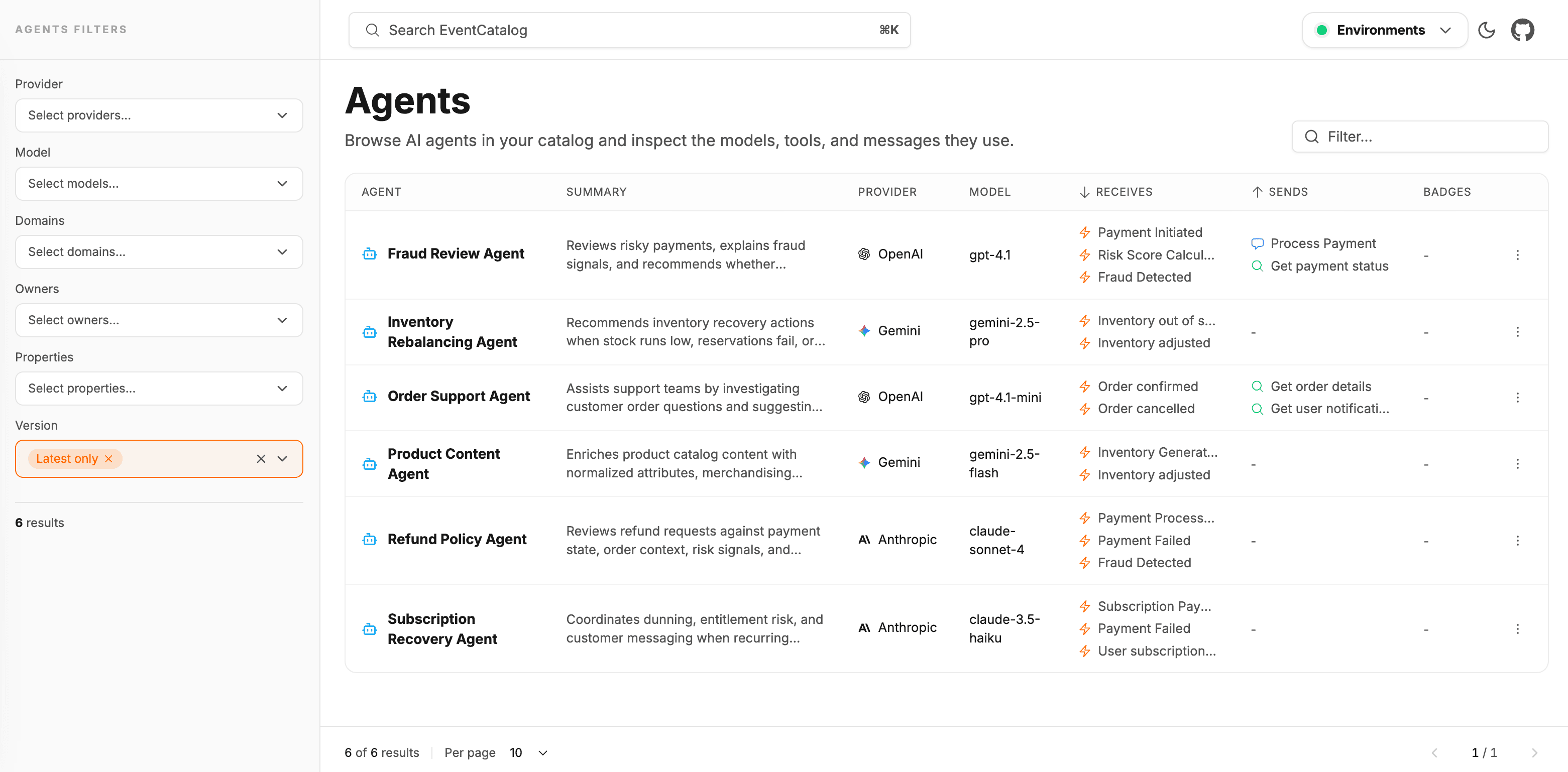
Agents appear in the discover page alongside services, messages, domains, and flows. You can search, filter, and browse them the same way you would any other resource.