Add entities to domains
Once you have created your entities you can add them to your domains.
To add an entity to a domain, add the entity to the entities array in the domain's markdown file.
---
id: Orders
name: Orders
version: 1.0.0
entities:
  - id: Order
    version: 1.0.0
  - id: OrderItem
    version: 1.0.0
---

Your domain markdown...
Visualize domain entities
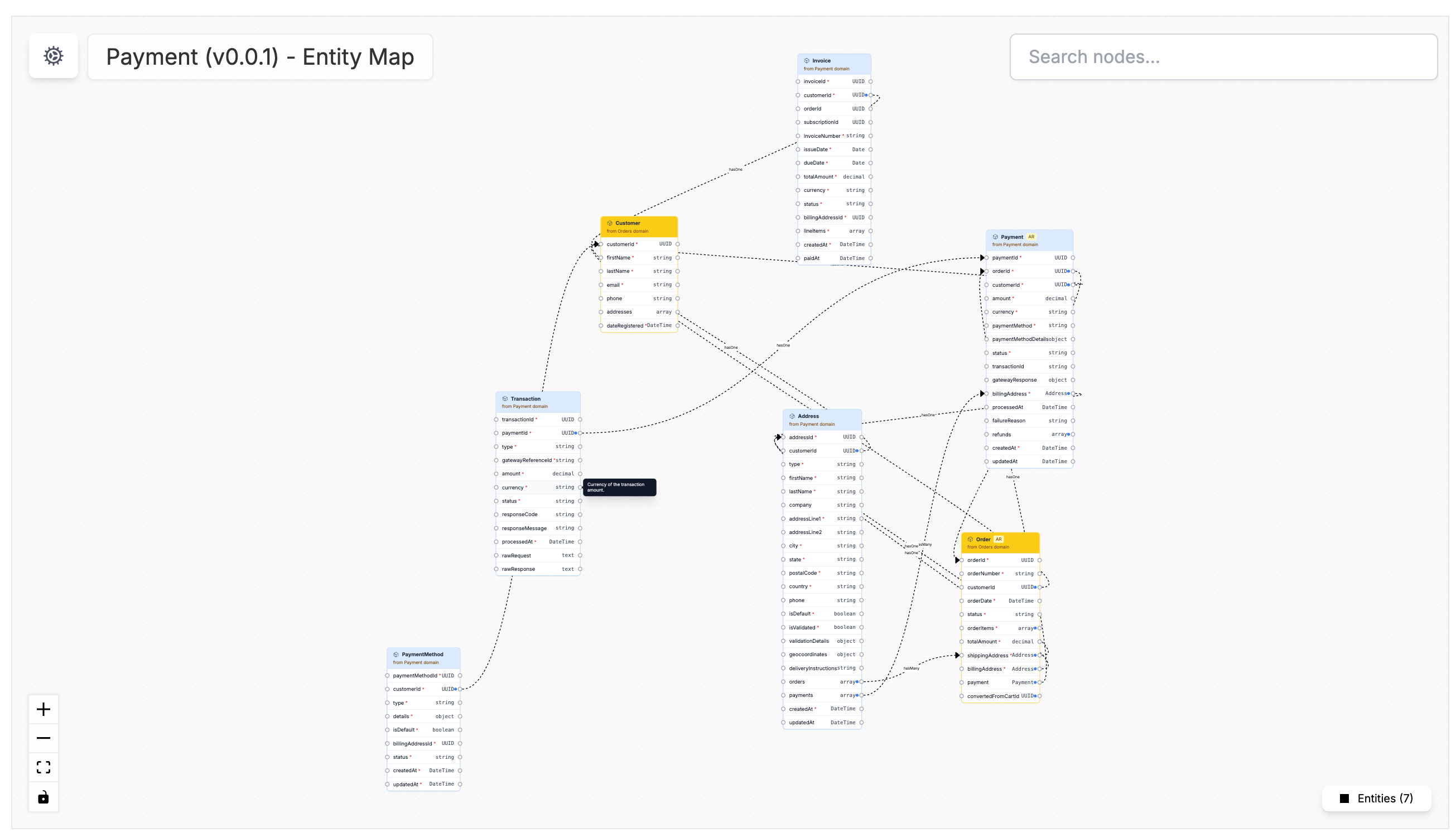
eventcatalog@2.49.0When a domain has entities assigned, EventCatalog can generate an entity map for that domain.
The entity map helps teams understand the domain model at a glance. It shows:
- The entities inside the domain
- The relationships between those entities
- Which entities are owned by the current domain
- Entities referenced from other domains
Entities that are referenced from another domain are shown as yellow.
View the entity map in the visualizer
EventCatalog creates a dedicated entity map visualizer route for domains:
/visualiser/domains/{id}/{version}/entity-map
For services, the route is:
/visualiser/services/{id}/{version}/entity-map
When a domain or service has entities assigned, an Entity Map link appears automatically in the resource sidebar under the visualizer section.
Embed the entity map on a page
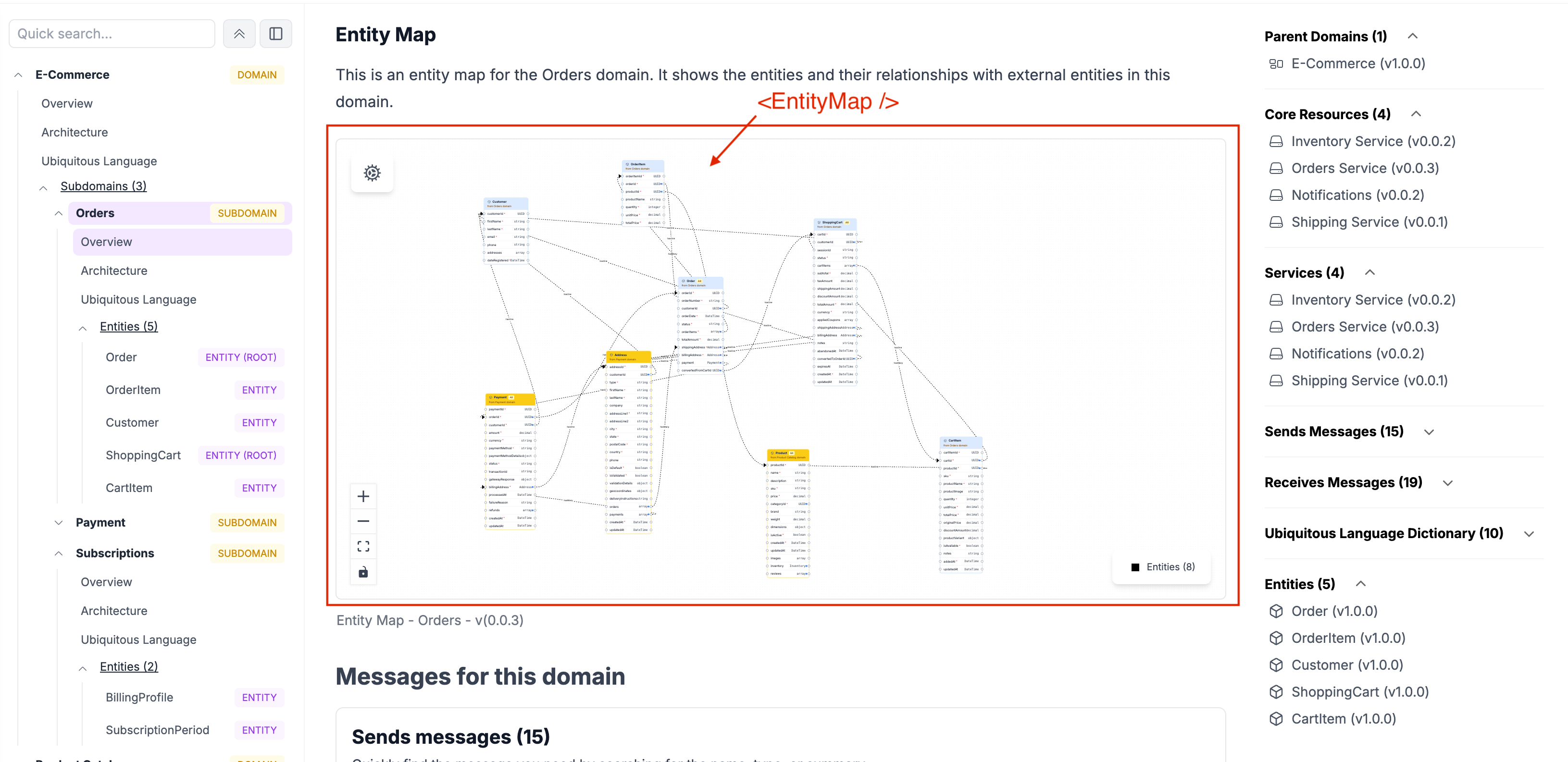
You can also embed the entity map of a domain on any page in your catalog using the <EntityMap /> component.
<EntityMap id="Orders" title="Orders Domain Entity Map" />
Create relationships between entities
Entity maps become more useful when your entities reference each other.
Use the optional reference fields on entity properties:
references: The entity you want to reference, for exampleOrderrelationType: The type of relationship, for examplehasOne,hasMany, orbelongsToreferencesIdentifier: The property in the referenced entity used to establish the relationship, for exampleorderId
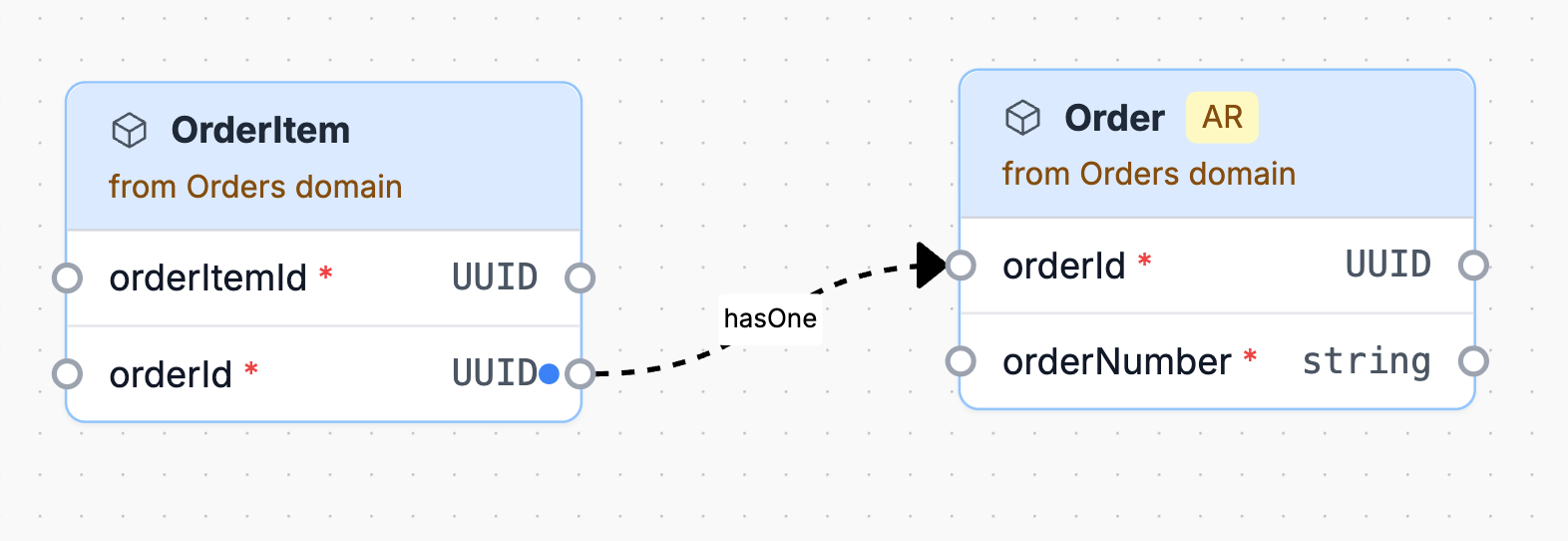
For example, an OrderItem can reference an Order through orderId.
---
id: OrderItem
name: OrderItem
version: 1.0.0
identifier: orderItemId
summary: Represents a single item within a customer's order.

properties:
  - name: orderItemId
    type: UUID
    required: true
    description: Unique identifier for the order item
  - name: orderId
    type: UUID
    required: true
    description: Identifier for the parent Order
    references: Order
    relationType: hasOne
    referencesIdentifier: orderId
---
This configuration generates an entity map that visually shows the relationship between OrderItem and Order.
More information on entity reference fields can be found in the entities reference.